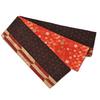
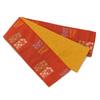
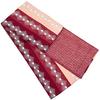
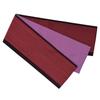
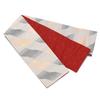
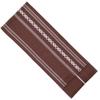
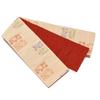
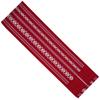
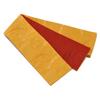
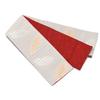
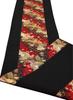
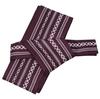
High-quality Kiryu weaving: Made using traditional weaving techniques from Kiryu, Gunma Prefecture.
Reversible design: Can be used in different ways depending on your mood or the occasion.
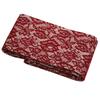
Lace pattern design: Creates an elegant impression perfect for mature women.
Lightweight and washable material: 100% polyester for easy care.
Easy-to-tie heko obi: Even beginners can easily create a beautiful obi knot.
Versatile uses: Perfect for yukata styles at summer festivals and fireworks displays, casual kimono outfits, and even as a gift for someone who loves traditional Japanese clothing.
Material: 100% Polyester
Dimensions (approx.): Length 380cm x Width 36cm
Made in Japan (Kiryu weave)
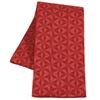
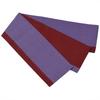
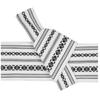
Color variations: Available in four colors: red/black, black/gray, white/silver, and purple/lavender. Choose the one that suits your preference.
"Kiryu-ori lace pattern reversible woven obi (sash), made in Japan"
~A gorgeous and easy-to-tie obi~
This is a heko obi (a type of sash) woven in Kiryu, Gunma Prefecture, a renowned center for textile production.
Ready-to-wear, ready-made garment. Made from 100% polyester, making it easy to care for at home.
We offer four color options: red and black, black and gray, white and silver, and purple and lavender.
This reversible obi can be used on both sides, expanding your styling options for kimonos and yukatas.
The look changes depending on how you tie it, and it's recommended for casual outfits such as komon, tsumugi, and yukata.
Since ancient times, there has been a custom of giving long items, such as sashes, as gifts to ward off evil.
Obi (kimono sashes) are perfect not only for personal use but also as gifts for loved ones.
Kiryu is a center of Japanese textile production.
Kiryu, located in southeastern Gunma Prefecture, has been renowned as a textile production center since the Nara period, 1,300 years ago.
It is a major textile production area, particularly known as "Nishijin in the west and Kiryu in the east," producing a large amount of obi fabric and patterned silk crepe.
Historical buildings, such as textile factories with sawtooth roofs, still remain today.
![Lace Pattern Reversible Woven Heiko Obi Made in Japan Adult Heiko Obi with Lace Pattern [Funny Coco] Kiryu-ori (Japanese sash) - - (Red & Black)](https://img.joomcdn.net/437b13a2e7cc79db9bfc957552c54d1ee99fded8_1024_1024.jpeg)
![Lace Pattern Reversible Woven Heiko Obi Made in Japan Adult Heiko Obi with Lace Pattern [Funny Coco] Kiryu-ori (Japanese sash) - - (Red & Black)](https://img.joomcdn.net/cfb1ff36f8cf8d05c2adae7f28a69a34682f2c22_1024_1024.jpeg)


 החזר על אי אספקה